
Can HBOT Improve Endurance Performance?
Endurance athletes and active individuals are always looking for ways to train more effectively, recover faster, and maintain consistent performance. One emerging area of interest is whether Hyperbaric Oxygen Therapy can support endurance performance and training recovery.
At OxyPlus in Newcastle, we provide medical-grade hyperbaric oxygen therapy in a controlled clinical environment. HBOT is primarily a recovery and tissue-support therapy, and interest is growing in how it may support physical performance through improved recovery and oxygen delivery.
What Is Hyperbaric Oxygen Therapy (HBOT)?
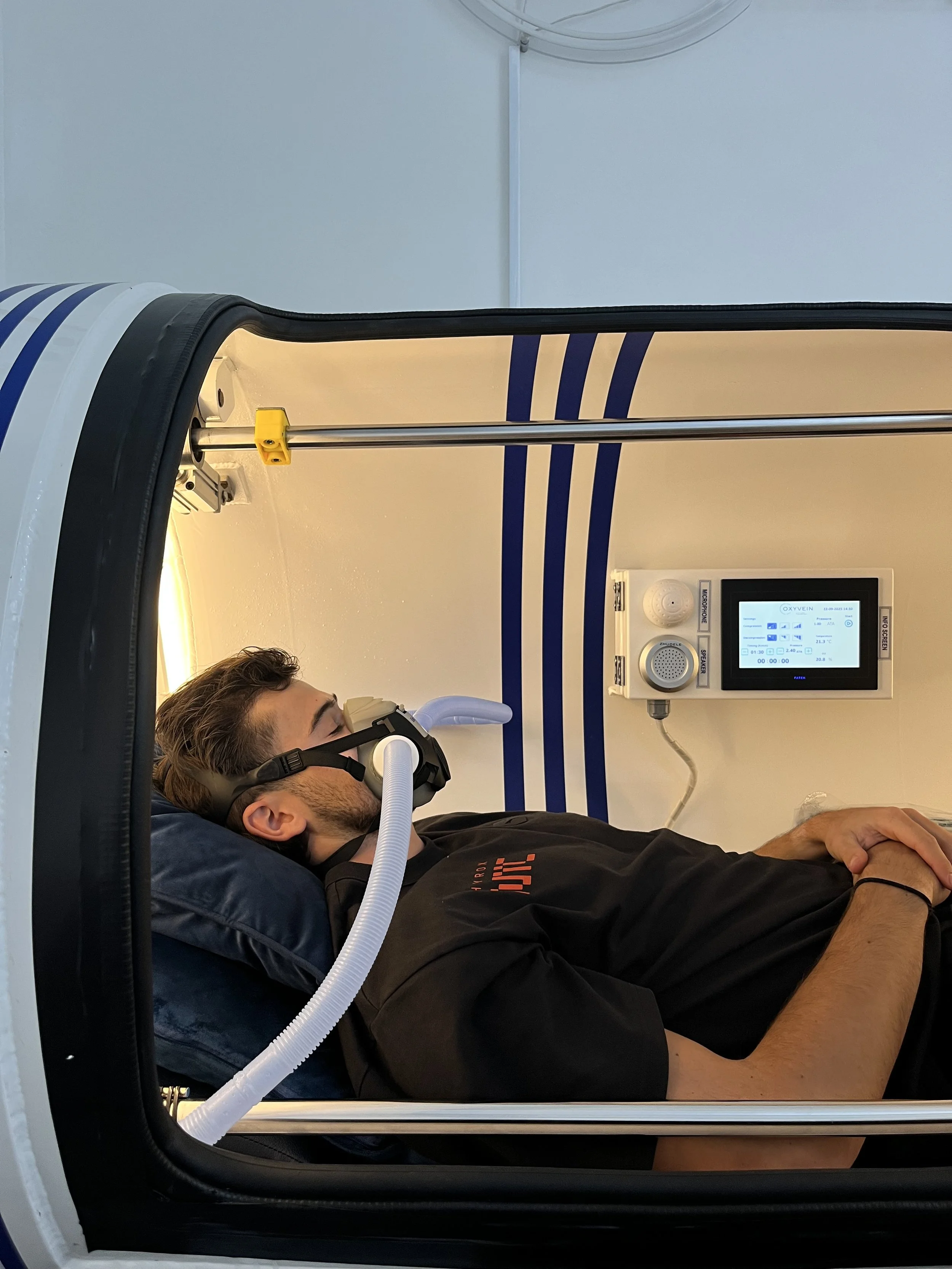
Hyperbaric Oxygen Therapy involves breathing 100% oxygen in a pressurised chamber. This increases the amount of oxygen dissolved in the blood, a process known as Hyperoxia.
This elevated oxygen availability allows oxygen to reach tissues more efficiently, including muscles that have been stressed through intense physical activity or endurance training.
How Oxygen Supports Endurance Performance
Endurance performance depends on several key physiological factors:
Oxygen delivery to working muscles
Energy production at a cellular level
Clearance of metabolic by-products
Recovery between training sessions
Oxygen plays a central role in aerobic energy production. When oxygen delivery is limited by fatigue or high training load, recovery can take longer and performance consistency may be affected.
Can HBOT Improve Endurance Performance?
HBOT is not designed as a direct performance enhancer, but it may support the physiological processes that underpin endurance training.
Research and clinical use suggest potential benefits in areas such as:
Supporting Faster Recovery
HBOT may help reduce recovery time between intense training sessions by increasing oxygen availability to muscles and soft tissues.
Reducing Post-Exercise Fatigue
Improved oxygen delivery may support the body’s natural recovery from training-related fatigue.
Supporting Muscle and Tissue Repair
Endurance training can create micro-stress in muscle tissue. HBOT may support the body’s natural repair processes in recovering tissues.
HBOT and Exercise Recovery
In sports and performance settings, HBOT is increasingly used as part of recovery strategies.
By increasing oxygen availability, HBOT may help support:
Recovery following intense endurance sessions
Reduced feelings of muscular fatigue
Improved readiness for subsequent training
Enhanced tissue repair following physical strain
This makes it of interest to runners, cyclists, triathletes, and other endurance-focused athletes.

What Does the Research Suggest?
Research into Hyperbaric Oxygen Therapy and endurance performance is still developing, but findings around recovery, oxygen utilisation, and exercise physiology are generally positive.
Several studies suggest HBOT may support key factors linked to endurance performance, including:
Faster recovery after intense exercise, particularly in reducing perceived fatigue
Improved muscle recovery markers, especially following high training loads
Enhanced oxygen delivery and utilisation in tissues, supporting aerobic metabolism
Improvements in exercise tolerance in some individuals following recovery cycles
Potential positive influence on VO₂-related efficiency in certain contexts, where improved oxygen availability may support the body’s ability to utilise oxygen more effectively during recovery and training adaptation
While direct increases in VO₂max are not consistently demonstrated across studies, HBOT may play a role in supporting the physiological environment that contributes to better training adaptation and endurance efficiency over time.
This is why HBOT is increasingly explored in sports recovery and rehabilitation settings as a recovery optimisation tool, particularly for endurance athletes and highly active individuals.
Organisations such as the Undersea and Hyperbaric Medical Society recognise HBOT for its established role in supporting oxygen-dependent healing processes, which underpin recovery after physical stress.
Overall, the research supports HBOT as a promising recovery modality that may help improve training consistency, recovery capacity, and overall endurance efficiency when used alongside structured training.
Who Might Consider HBOT for Training Support?
At OxyPlus in Newcastle, HBOT may be considered for individuals who:
Undertake regular endurance training
Experience delayed recovery between sessions
Want to support muscle recovery and adaptation
Are managing training load or physical fatigue
All individuals undergo a clinical assessment to determine suitability.
Important: HBOT and Performance
Hyperbaric Oxygen Therapy should be viewed as a supportive recovery therapy, not a replacement for:
Structured training programmes
Nutrition strategies
Rest and sleep optimisation
Medical care where required
Its value lies in supporting the body’s natural recovery processes.
What Happens During an HBOT Session?
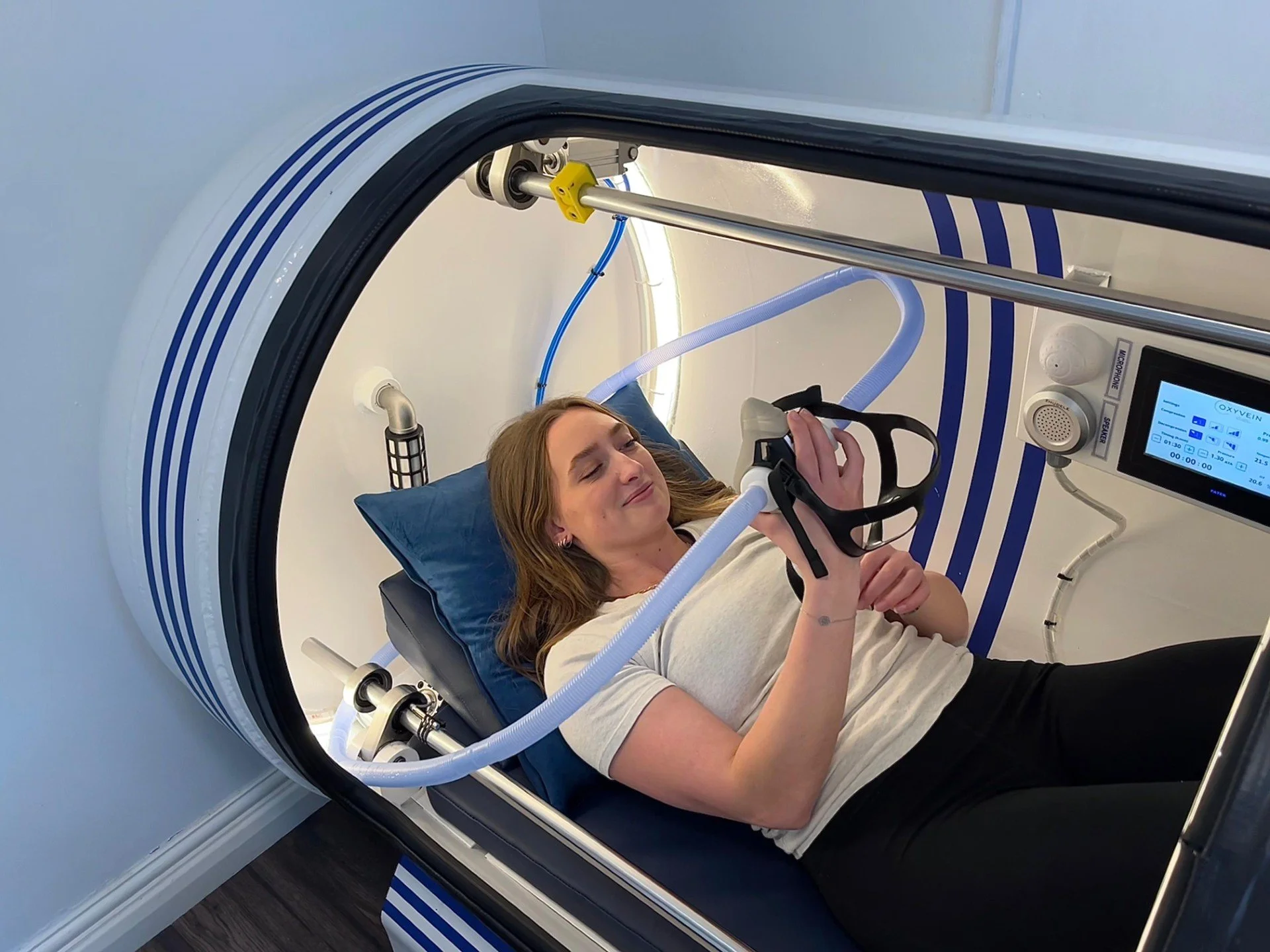
In a medical-grade hyperbaric oxygen therapy chamber in Newcastle, patients:
Sit or lie comfortably inside the chamber
Experience a gradual increase in pressure
Breathe 100% oxygen for 60–90 minutes
Are monitored throughout by trained clinical staff
Most people find the experience relaxing. Mild ear pressure may occur, similar to flying.
Hyperbaric Oxygen Therapy in Newcastle
If you are exploring HBOT for endurance recovery or training support in Newcastle, OxyPlus offers medical-grade treatment in a clinically supervised environment.
We assess each individual to determine whether HBOT may support their recovery and performance goals.
Conclusion
So, can Hyperbaric Oxygen Therapy improve endurance performance?
Current evidence suggests it is most effective in supporting recovery, reducing fatigue, improving muscle repair, and enhancing training consistency over time.
For active individuals and athletes, HBOT may be a valuable addition to a broader recovery strategy when guided by clinical assessment.
If you are interested in learning more, a consultation at our Newcastle clinic can help determine whether HBOT is appropriate for you.