
HBOT and Mitochondrial Function: Why Oxygen Is the Key to Reducing Fatigue
If you've been dealing with fatigue that doesn't improve with rest, brain fog, poor recovery after exercise, or a general sense that your body isn't running at full capacity, there's a good chance the conversation needs to start at the cellular level specifically, with your mitochondria.
Mitochondria are the energy-producing organelles inside almost every cell in your body. They convert oxygen and nutrients into adenosine triphosphate (ATP), the molecule that powers virtually every biological process, from muscle contraction to nerve signalling to immune function. When mitochondria work well, you have energy. When they don't, the effects ripple outward into almost every system in the body.
At OxyPlus, our hyperbaric oxygen therapy clinic in Newcastle, mitochondrial health is one of the most scientifically compelling reasons people explore HBOT. This post explains what mitochondrial dysfunction actually is, why oxygen is so central to cellular energy, and what the research tells us about how HBOT interacts with these fundamental biological processes.

What Mitochondria Actually Do — and Why They Matter So Much
The analogy most people have heard is that mitochondria are the "powerhouses of the cell." It's a simplification, but it captures something real. Through a process called oxidative phosphorylation, which takes place across the inner mitochondrial membrane, mitochondria use oxygen to generate ATP from glucose and fat. This process accounts for the vast majority of the body's energy supply.
The scale of this operation is remarkable. A single heart muscle cell may contain up to 5,000 mitochondria. The liver is similarly dense. Even brain neurons, which cannot store energy and must generate it continuously, depend moment-to-moment on mitochondrial function.
Critically, oxygen is not just an ingredient in this process, it is the final acceptor of electrons in the electron transport chain, the molecular machinery that drives ATP production. Without adequate oxygen, the chain slows, ATP production falls, and cells begin to struggle.
This is why mitochondrial dysfunction and oxygen insufficiency are so often intertwined, and it's why hyperbaric oxygen therapy, which dramatically increases oxygen availability at the cellular level, has attracted serious scientific attention as a way to support mitochondrial health.
When Mitochondria Fail: What Goes Wrong
Mitochondrial dysfunction (a broad term for impaired mitochondrial performance) can arise from ageing, chronic illness, viral infection, metabolic conditions, oxidative stress, and prolonged inflammation. It doesn't necessarily mean inherited mitochondrial disease. Acquired mitochondrial dysfunction is increasingly recognised as a feature of many common conditions.
The consequences of impaired mitochondrial function include:
Profound, treatment-resistant fatigue. When cells can't produce enough ATP, the most immediate result is exhaustion that doesn't respond to rest. Research has consistently shown that patients with chronic fatigue syndrome have measurably reduced ATP production and impaired oxidative phosphorylation pathways. Pointing directly to mitochondrial dysfunction as a root mechanism rather than a secondary effect.
Brain fog and cognitive difficulties. The brain is extraordinarily energy-demanding, consuming around 20% of the body's total energy output despite representing only 2% of body weight. Neurons have almost no energy reserves and depend on continuous mitochondrial ATP production. Mitochondrial dysfunction is causally linked to cognitive disturbances in the brain, fatigue and muscle weakness in muscle, and breathlessness and cardiac symptoms. Connected through mechanisms including energy production deficits, oxidative stress, immune dysregulation, and vascular dysfunction.
Post-exertional malaise. The characteristic symptom of conditions like ME/CFS, where even mild activity triggers a worsening of symptoms for days afterward, is thought to reflect mitochondria that cannot recover their energy output after demand spikes. Studies into chronic fatigue have shown key indicators of mitochondrial dysfunction including lower production of ATP and impairment of the oxidative phosphorylation pathways, and the crucial symptoms of fatigue, exercise intolerance, and myalgia are shared by patients with primary mitochondrial diseases.
Muscle weakness and poor physical recovery. Mitochondria in skeletal muscle are responsible for sustained aerobic energy output. When they underperform, exercise capacity falls and recovery is slow.
Accelerated cellular ageing. Mitochondrial decline is one of the established hallmarks of biological ageing. As mitochondria become less efficient, they produce more reactive oxygen species (ROS) as a byproduct, which causes further oxidative damage in a self-reinforcing cycle.

The Long COVID Connection
The link between mitochondrial dysfunction and long COVID has become one of the most active areas of research in medicine. Key findings in post-COVID research highlight reduced ATP production, heightened oxidative stress, and disrupted mitochondrial biogenesis, metabolic abnormalities that closely mirror those seen in chronic fatigue syndromes.
There is high plausibility of abnormalities of energy production or mitochondrial function as the aetiology of post-COVID fatigue and ME/CFS, with recent research showing that SARS-CoV-2 reduces mitochondrial proteins, specifically Complex One, to quiet the cell's metabolic output.
For many people attending our Newcastle HBOT clinic with long COVID, the fatigue and brain fog they experience are not simply about lingering inflammation, they reflect a deeper disruption of cellular energy production that standard approaches don't address. This is one of the reasons HBOT has attracted growing interest as a complementary approach for long COVID recovery.

How HBOT Supports Mitochondrial Function: The Science
1. Delivering the Oxygen Mitochondria Need
The most direct mechanism is the most straightforward. Mitochondria require oxygen to produce ATP via oxidative phosphorylation. When tissue oxygenation is compromised. Whether due to poor circulation, inflammation, chronic illness, or the aftermath of viral infection, mitochondrial function suffers accordingly.
HBOT dissolves oxygen directly into blood plasma at concentrations far beyond what breathing normal air can achieve. This bypasses reliance on haemoglobin and red blood cells, reaching tissues and cells through the plasma itself. The result is a surge of oxygen availability at the cellular level, giving mitochondria the raw material they need to resume efficient ATP production.
For mitochondria, this is like giving a failing factory unlimited fuel and raw materials to restart production.
2. Stimulating Mitochondrial Biogenesis via PGC-1α and SIRT1
Beyond simply supplying oxygen, HBOT appears to trigger the creation of entirely new mitochondria, a process called mitochondrial biogenesis. This is where the science becomes particularly compelling.
During intermittent HBOT protocols, two phenomena occur sequentially and repeatedly, hyperoxia and apparent hypoxia. This recruits two important factors that affect mitochondrial function and mitochondrial biogenesis: hypoxia-inducible factor (HIF-1α) and SIRT1, a class III histone deacetylase belonging to the sirtuin family, also known as longevity proteins.
Research shows that HBOT stimulates PGC-1α, a master regulator of mitochondrial growth, leading to the creation of new mitochondria, more mitochondria meaning more energy and resilience.
PGC-1α is one of the most important molecules in cellular energy biology. It coordinates the transcription of genes involved in mitochondrial biogenesis, oxidative metabolism, and antioxidant defence. It's activated by exercise, which is one of the reasons regular physical activity improves energy and resilience. HBOT appears to activate the same pathway through a different mechanism: the repeated cycle of hyperoxia and relative hypoxia.
SIRT1, meanwhile, is a longevity-associated protein that regulates mitochondrial function, reduces cellular senescence, and modulates inflammation. Its activation by HBOT links mitochondrial health directly to the broader anti-ageing mechanisms discussed in our companion post on HBOT and longevity.
3. Enhanced ATP Production and Cellular Energy Output
The downstream effect of better-functioning mitochondria and more of them is increased ATP production, measurable at the cellular level. Research published in Frontiers in Neurology confirms that HBOT affects mitochondrial biogenesis and function through increased Bcl-2, reduced Bax, and enhanced ATP production with Bcl-2 being a key protein that protects mitochondria from stress-induced damage, and Bax being a pro-apoptotic factor that drives cell death when mitochondrial damage is severe.
The practical implication is that cells treated with HBOT are producing more energy and are more resistant to the kind of mitochondrial stress that drives dysfunction in the first place.
4. The Hormetic Oxidative Stress Response
One of the more counterintuitive aspects of HBOT's mitochondrial benefits involves reactive oxygen species (ROS). Excessive ROS production is a hallmark of mitochondrial dysfunction and drives oxidative damage. Yet HBOT (which increases oxygen) produces a temporary, controlled rise in ROS.
This is hormesis in action: a mild stressor that triggers an adaptive response greater than the stressor itself. The temporary ROS increase from HBOT activates the body's endogenous antioxidant systems including Nrf2, superoxide dismutase, and catalase producing a net reduction in oxidative stress over time. Research published in the Journal of Applied Physiology in 2025 found that most transcriptional and translational changes in the antioxidant system and mitochondrial biogenesis peaked around 2–6 hours after HBOT, suggesting that mitochondrial upregulation and protective responses to oxidative stress contribute to the beneficial effects of hyperbaric oxygen treatment.
This is the same paradox that makes exercise beneficial despite generating ROS, the body's adaptive response to controlled stress produces a net improvement in resilience and function.
5. Neuroprotection and Brain Energy Metabolism
The brain's extraordinary energy demands make it particularly sensitive to mitochondrial dysfunction and particularly responsive to interventions that support mitochondrial health.
Through hyperoxygenation of tissues, HBOT increases mitochondrial biogenesis and thus addresses the metabolic mismatch in the function of damaged cells, synapses, and conduction pathways fostering the direct revitalisation and repair of neural circuits, enhancing their sensitivity to inherent stimulatory and inhibitory signals.
A 2024 review published in Frontiers in Neurology confirmed measurable improvements in brain activity in key regions including the left dorsolateral prefrontal cortex following HBOT regions involved in executive function, working memory, and cognitive control. The mechanism is not simply "more oxygen in the brain" it is the downstream effect of restored mitochondrial function supporting neuronal energy metabolism, neurogenesis, and the reduction of neuroinflammation.
For people experiencing brain fog, whether from long COVID, chronic fatigue, ageing, or other causes, the mitochondrial route to cognitive improvement is one of the most scientifically coherent explanations for why HBOT helps.
6. Parkinson's Disease and Mitochondrial Neuroprotection
One of the most striking areas of HBOT and mitochondria research involves Parkinson's disease a condition fundamentally linked to mitochondrial failure in dopaminergic neurons.
Parkinson's disease is associated with defects in mitochondrial respiration, and research has shown that HBOT can effectively inhibit the decrease in dopaminergic cells in the substantia nigra through the SIRT1/PGC-1α pathway promoting mitochondrial biogenesis in neurons affected by the condition.
While this research is still developing, it illustrates the breadth of conditions in which HBOT's mitochondrial mechanisms may be relevant and how central the oxygen-mitochondria relationship is to neurological health more broadly.
Who Might Benefit: Mitochondrial HBOT in Practice
The mitochondrial mechanisms underlying HBOT are relevant to a wide range of people — not just those with diagnosed mitochondrial conditions. At OxyPlus in Newcastle, the clients who most commonly enquire about HBOT for mitochondrial and energy-related reasons include those dealing with:
Long COVID fatigue and brain fog — where mitochondrial disruption is now recognised as a core feature of the condition's pathophysiology rather than a secondary effect.
Chronic fatigue syndrome and ME/CFS — conditions where impaired ATP production and oxidative phosphorylation have been repeatedly documented and where conventional approaches often fall short.
Age-related energy decline — mitochondrial density and efficiency decrease with age; HBOT's stimulation of PGC-1α and SIRT1 represents a scientifically credible mechanism for supporting mitochondrial health as we get older.
Post-surgical or post-illness fatigue — periods of illness, surgery, or prolonged infection can impair mitochondrial function; HBOT supports the restoration of cellular energy capacity during recovery.
Athletic performance and recovery — for those wanting to optimise training recovery, increased mitochondrial density and improved oxidative metabolism are directly relevant to performance.
Metabolic conditions — a 2025 systematic review found that HBOT enhances insulin sensitivity, reduces adipose tissue inflammation, and stimulates the expression of transcriptional regulators involved in mitochondrial biogenesis including SIRT1 and PGC-1α, in the context of metabolic syndrome and obesity.
Important Caveats
The mitochondrial research supporting HBOT is compelling and growing, but it is important to be honest about where we are.
Much of the mechanistic evidence comes from cell studies and animal models. The human clinical evidence, particularly for fatigue and ME/CFS, is less advanced than the basic science suggests it should be, in part because these conditions have historically been underfunded in research terms. The long COVID research pipeline is more active and moving quickly.
HBOT is not a cure for mitochondrial disease, and it is not a replacement for foundational lifestyle factors, adequate sleep, regular movement, good nutrition, and stress management, which all independently support mitochondrial health. It is best understood as a potentially powerful adjunct within a broader approach.
As with all HBOT treatment at OxyPlus, every client undergoes a thorough health consultation before beginning any course of treatment, and we always recommend discussing HBOT with your GP or specialist as part of your wider care plan.
HBOT for Mitochondrial Health in Newcastle - What to Expect at OxyPlus
If you're considering HBOT to support your energy, recovery, or mitochondrial health, here's how we approach it at OxyPlus, Newcastle's specialist hyperbaric oxygen therapy clinic:
Initial Consultation — We discuss your health history, symptoms, energy levels, and goals. This helps us understand whether a mitochondrial approach is appropriate and design the right protocol for you.
Personalised Protocol — For mitochondrial and energy-related goals, protocols typically involve 10–40 sessions, based on the research evidence for triggering biogenesis and sustainable improvement in cellular energy function.
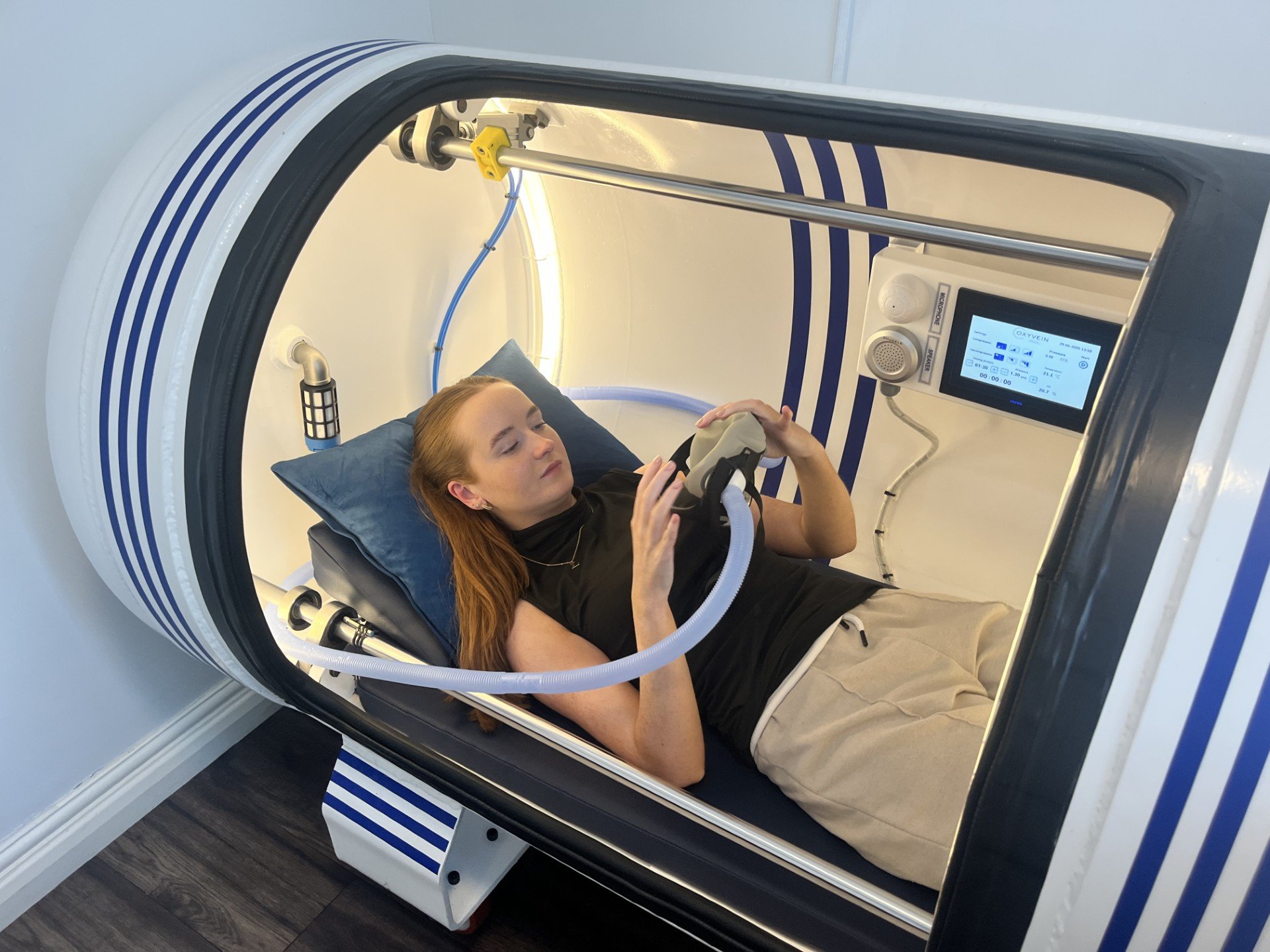
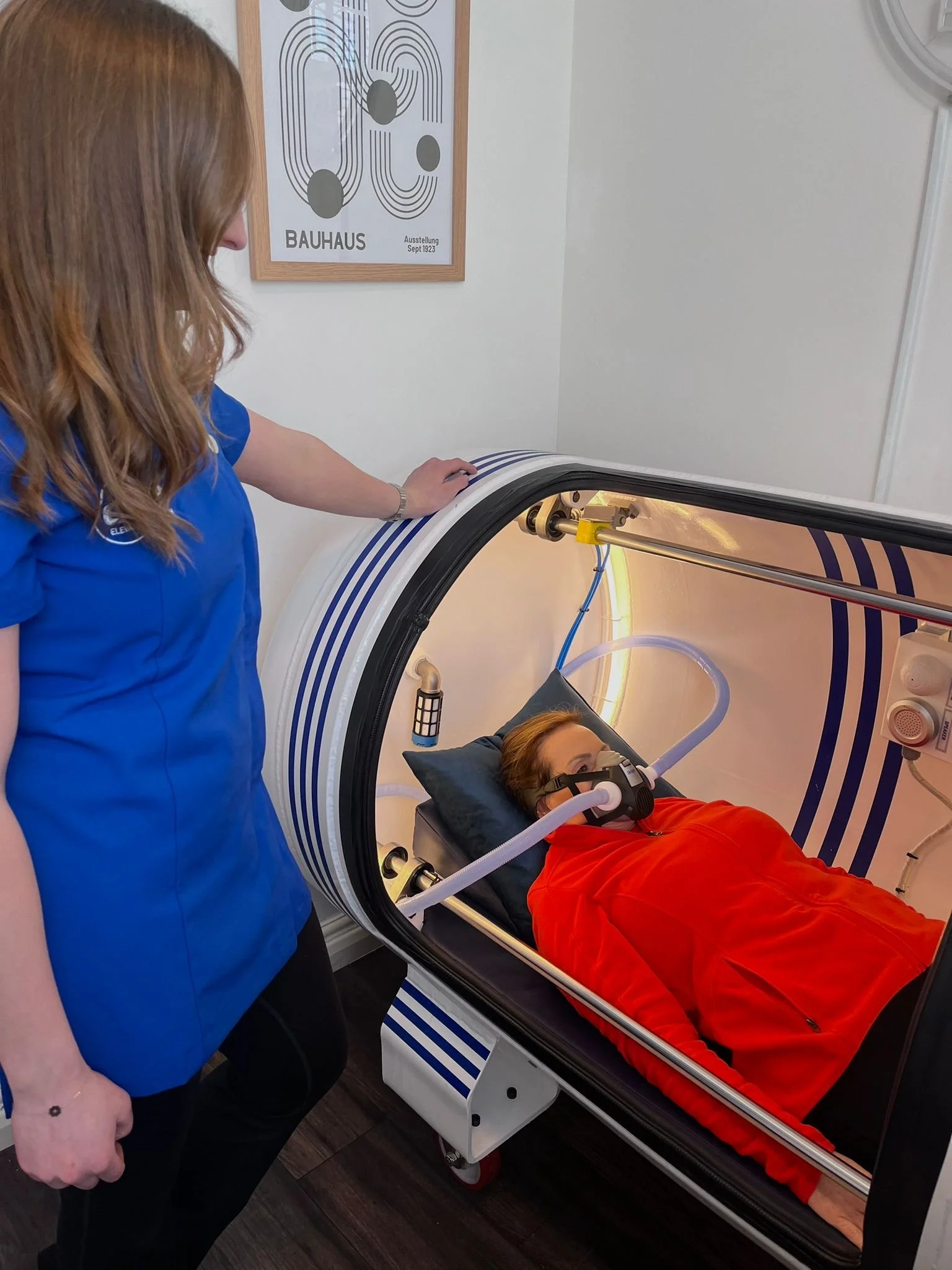
Comfortable, Supervised Sessions — Each session is 30–90 minutes breathing 100% oxygen in our medical-grade chamber. Most clients find sessions deeply restful — many report improved sleep quality and energy levels within the first few weeks.
Progress Review — We check in throughout and adapt the plan based on your response.
We are conveniently located in Newcastle, with clients attending from across the North East — including Gateshead, Sunderland, Durham, Northumberland, and beyond.
Frequently Asked Questions About HBOT and Mitochondrial Function
-
A: Research increasingly points to mitochondrial dysfunction. Specifically impaired ATP production and oxidative phosphorylation, as a core feature of chronic fatigue conditions. HBOT addresses this directly by increasing oxygen availability for mitochondrial energy production, stimulating the creation of new mitochondria via PGC-1α and SIRT1, and reducing the oxidative stress that impairs mitochondrial function. Many clients attending OxyPlus Newcastle for fatigue report meaningful improvements in energy and cognitive clarity over a course of treatment.
-
A: Mitochondrial biogenesis is the process of creating new mitochondria within cells. More mitochondria means greater capacity to produce ATP, the body's energy currency. Biogenesis declines with age, illness, and inactivity. HBOT stimulates biogenesis through the PGC-1α and SIRT1 pathways, the same pathways activated by exercise and caloric restriction, making it one of the few non-pharmacological approaches with direct evidence for promoting this process.
-
A: Research protocols for conditions involving mitochondrial dysfunction typically involve 20–40 sessions. At OxyPlus Newcastle, we design individual protocols during your consultation based on your specific situation and goals.
-
A: Yes - long COVID is now understood to involve significant mitochondrial disruption, particularly in the context of energy production, and HBOT addresses several of the underlying mechanisms. It is one of the most common reasons clients visit our Newcastle clinic. We recommend discussing this alongside any other treatment you are receiving from your GP or specialist.
-
A: OxyPlus is Newcastle's specialist hyperbaric oxygen therapy clinic, offering medical-grade HBOT with thorough clinical consultations. We serve clients across Newcastle, Gateshead, Sunderland, Durham, and Northumberland. Visit oxyplus.co.uk to book your consultation.