
HBOT for Fibromyalgia: Addressing the Pain Nobody Believes In
If you have fibromyalgia, you'll already know the particular exhaustion of not just living with the condition but having to justify its existence. The pain that other people can't see. The test results that come back normal while you feel anything but. The appointments where you leave feeling more dismissed than when you arrived.
Patients with fibromyalgia frequently report feeling dismissed or invalidated, their experiences overshadowed by scepticism from healthcare providers, which can hinder their diagnostic and treatment journey. Research has found that patients had to present to an average of 3.7 different physicians over 2.3 years before receiving a fibromyalgia diagnosis.
This is not a post that will tell you the pain is in your head. It is a post that will explain, with reference to peer-reviewed clinical research, what is actually happening in the brains and nervous systems of people with fibromyalgia, and why hyperbaric oxygen therapy (HBOT) is one of the more scientifically credible approaches to emerge for a condition that conventional medicine has long struggled to treat.
At OxyPlus, our hyperbaric oxygen therapy clinic in Newcastle, we work with people navigating fibromyalgia and other chronic pain conditions. This post is for anyone who has been told there's nothing more that can be done, and wants to understand what the research actually says.

First: What Is Fibromyalgia, Really?
Fibromyalgia is one of the most challenging chronic pain conditions to treat. Historically stigmatised and its existence still doubted by some physicians, patients often experience substantial diagnostic delays. Insufficient understanding of disease mechanisms means that no drug treatment provides substantial benefit, prompting the search for new interventions.
Fibromyalgia affects 2–4% of the general population, twice as common in women than in men, and around a quarter of people with rheumatic disease. It is characterised by widespread pain, fatigue, sleep disturbances, and cognitive dysfunction, and is considered the prototypic nociplastic pain syndrome.
The term "nociplastic" is important. It means the pain is not caused by tissue damage or inflammation in the conventional sense, it is generated by the nervous system itself. The central sensitisation theory posits that the primary symptoms of fibromyalgia result from an increase in the efficacy and excitability of neurons in central nociceptive pathways, functional and structural alterations in cortical pathways that result in patients becoming chronically sensitised, which lowers their threshold for pain.
In plain language: the brain's pain-processing system has become stuck in a state of hypersensitivity. The volume dial for pain is turned too high, and it won't turn down. The evidence suggests that the pain in fibromyalgia results primarily from abnormalities in pain processing pathways, the "volume" of the neurons set too high, with hyper-excitability of pain processing pathways.
This is why standard pain approaches often fail. You cannot treat central sensitisation with anti-inflammatories alone, because the problem is not primarily inflammatory in the peripheral tissue, it is neurological. The question is: what can actually recalibrate the brain's pain system?
This is exactly where the HBOT research becomes compelling.
The HBOT and Fibromyalgia Research: What Clinical Trials Have Found
The research on HBOT for fibromyalgia is not a handful of small observational studies. It includes multiple prospective clinical trials, randomised controlled comparisons against pharmaceutical standard-of-care, and objective brain imaging data from SPECT scans. The results are striking.
The Landmark Prospective Trial: All Symptoms Improved
A prospective, active-control, crossover clinical trial enrolled 60 female patients aged 21–67, all diagnosed with fibromyalgia for at least two years. The HBOT protocol comprised 40 sessions, five days per week, 90 minutes per session, breathing 100% oxygen at 2 ATA. HBOT in both groups led to significant amelioration of all fibromyalgia symptoms, with significant improvement in quality of life.
"All symptoms" is a meaningful phrase. Fibromyalgia presents as a cluster of difficulties, pain, fatigue, sleep disturbance, cognitive impairment, mood disturbance, and they improved together. But perhaps more significant than the symptom data was what happened on brain imaging.
Analysis of SPECT imaging revealed rectification of the abnormal brain activity: decrease of the hyperactivity mainly in the posterior region and elevation of the reduced activity mainly in frontal areas. No improvement in any of the parameters was observed following the control period.
The study provides evidence that HBOT can improve the symptoms and quality of life of fibromyalgia patients. Moreover, it shows that HBOT can induce neuroplasticity and significantly rectify abnormal brain activity in pain-related areas.
This is an important distinction. The brain scans before and after HBOT showed objectively measurable changes in the exact areas associated with pain processing. The pain relief was not a placebo response, it correlated with visible, quantifiable changes in brain function.
HBOT vs. Standard Medication: Head-to-Head
The research didn't stop at demonstrating that HBOT works for fibromyalgia. Subsequent trials asked a harder question: how does it compare to current pharmaceutical treatment?
A randomised controlled trial compared HBOT against pharmacological intervention in fibromyalgia patients following traumatic brain injury. Results demonstrated a significant group-by-time interaction in pain intensity post-HBOT compared to the medication group, with a large net effect size of d = -0.95 in pain intensity reduction following HBOT compared to medications. Fibromyalgia-related symptoms and pain questionnaires demonstrated significant improvements induced by HBOT, as well as improvements in quality of life and increases in pain thresholds. SPECT demonstrated significant group-by-time interactions between HBOT and medication groups in the left frontal and right temporal cortex.
A net effect size of 0.95 is, statistically, very large. For context, most pharmaceutical interventions for fibromyalgia demonstrate modest effect sizes at best, which is precisely why no drug treatment provides substantial benefit and why the search for alternatives is so active.
HBOT vs. Medication in Trauma-Related Fibromyalgia
A randomised clinical trial compared HBOT to FDA-approved medications, pregabalin and duloxetine, in 48 participants diagnosed with fibromyalgia with a history of childhood trauma. Results revealed a significant group-by-time interaction for the Fibromyalgia Impact Questionnaire score favouring HBOT over medication, with a large effect size of Cohen's d = -1.27. Similar findings were observed in emotional symptoms and functional measures. SPECT imaging demonstrated an increase in activity in pre-frontal and temporal brain areas, which correlated with symptom improvement. HBOT exhibited superior benefits over medications in terms of physical, functional, and emotional improvements.
An effect size of 1.27 is exceptionally large in the context of clinical medicine. To see results of this magnitude in a condition as treatment-resistant as fibromyalgia, and to see them outperform the current standard of care, is a genuinely important finding.
The 2024 Systematic Review and Meta-Analysis
A 2024 systematic review and meta-analysis published in the Journal of Medical Evidence conducted a systematic search across MEDLINE, Web of Science, the Cochrane Library, and Scopus to assess the clinical efficacy and safety of HBOT for pain reduction in fibromyalgia patients compared to conventional therapy.
A 2025 systematic review following PRISMA guidelines included 18 studies involving 671 participants. HBOT protocols ranged from 3 to 60 sessions at 1.3–2.5 ATA. Consistent reductions in pain and functional improvements were observed in fibromyalgia, with associated improvements in quality of life and inflammatory markers.
The consistency of findings across multiple independent research groups, different patient populations, and different methodologies strengthens the case considerably.
Recent Case Study Evidence: Objective Brain Imaging
A 2025 case study found that HBOT drove neuroplasticity that translated into meaningful gains in pain relief, physical function, and cognition. Improvements in attention and faster cognitive processing were observed, as well as gains in executive function and motor coordination of up to 26%. These improvements correlated with changes in brain imaging: increased blood flow in areas associated with motor function, executive processing, memory and emotional regulation.

How Does HBOT Help Fibromyalgia? The Mechanisms
Understanding why HBOT helps requires understanding what fibromyalgia actually is at a neurological level — and how oxygen delivery interacts with pain processing.
1. Resetting Central Sensitisation Through Neuroplasticity
The core mechanism is neuroplasticity, the brain's ability to reorganise and change. The consistent finding across fibromyalgia HBOT trials is that treatment produces measurable changes in brain activity in the pain-processing regions: reducing the hyperactivity in posterior areas that drives amplified pain signals, and restoring activity in frontal areas associated with pain regulation and inhibition.
This is not symptom management in the traditional sense. It is a biological recalibration of the pain system itself, addressing the central sensitisation that underlies fibromyalgia rather than simply trying to suppress its outputs.
2. Increasing Cerebral Blood Flow to Pain-Regulating Regions
The frontal cortex, specifically the prefrontal cortex, plays a critical role in the brain's descending pain inhibitory system. When frontal activity is reduced, as it consistently is in fibromyalgia, the brain's ability to regulate and dampen pain signals is impaired.
HBOT increases cerebral blood flow and oxygen delivery to these under-perfused regions. As oxygenation improves, neuronal function in the frontal areas recovers, and with it, the brain's capacity to modulate pain from the top down.
3. Reducing Neuroinflammation
Since some of the neurochemical abnormalities that occur in fibromyalgia can also regulate mood, sleep and energy, it may explain why mood, sleep and fatigue problems are commonly co-morbid with fibromyalgia.
Neuroinflammation (inflammatory activity within the central nervous system) is now understood as a significant contributor to central sensitisation. HBOT's well-documented anti-inflammatory effects, including reductions in TNF-α and IL-6, are directly relevant to this neuroinflammatory component of fibromyalgia. By reducing neuroinflammation, HBOT helps create a biological environment in which the chronically sensitised nervous system can begin to recalibrate.
4. Supporting Mitochondrial Function and Energy Production
Fatigue in fibromyalgia is not simply tiredness, it reflects, in part, impaired cellular energy production. Research has documented mitochondrial dysfunction and reduced ATP production in fibromyalgia patients, contributing to the exhaustion, muscle weakness, and post-exertional worsening that characterise the condition.
HBOT's demonstrated ability to stimulate mitochondrial biogenesis, the creation of new mitochondria, and increase ATP production is directly relevant here. Improved cellular energy production supports both the physical energy deficits of fibromyalgia and the neurological function required for pain regulation. (For a deeper exploration of this mechanism, see our companion post on HBOT and Mitochondrial Function.)
5. Improving Sleep Architecture
Sleep disturbance is both a symptom and a driver of fibromyalgia, poor sleep worsens central sensitisation, which worsens pain, which worsens sleep. Clients undergoing HBOT frequently report improvements in sleep quality in the early weeks of treatment. Improved sleep, in turn, supports the brain's overnight pain-regulatory processes and contributes to the broader cycle of improvement.
6. Cognitive Function — Addressing Fibro Fog
HBOT-driven neuroplasticity translates into meaningful gains in pain relief, physical function, and cognition, with improvements in attention, faster cognitive processing, and gains in executive function correlating with increased blood flow in brain areas associated with executive processing and memory.
The cognitive difficulties of fibromyalgia, often called "fibro fog", reflect the same underlying neurological disruption as the pain itself. As HBOT normalises brain activity and blood flow in the relevant regions, cognitive clarity tends to improve alongside pain reduction.
What to Expect: HBOT for Fibromyalgia in Practice
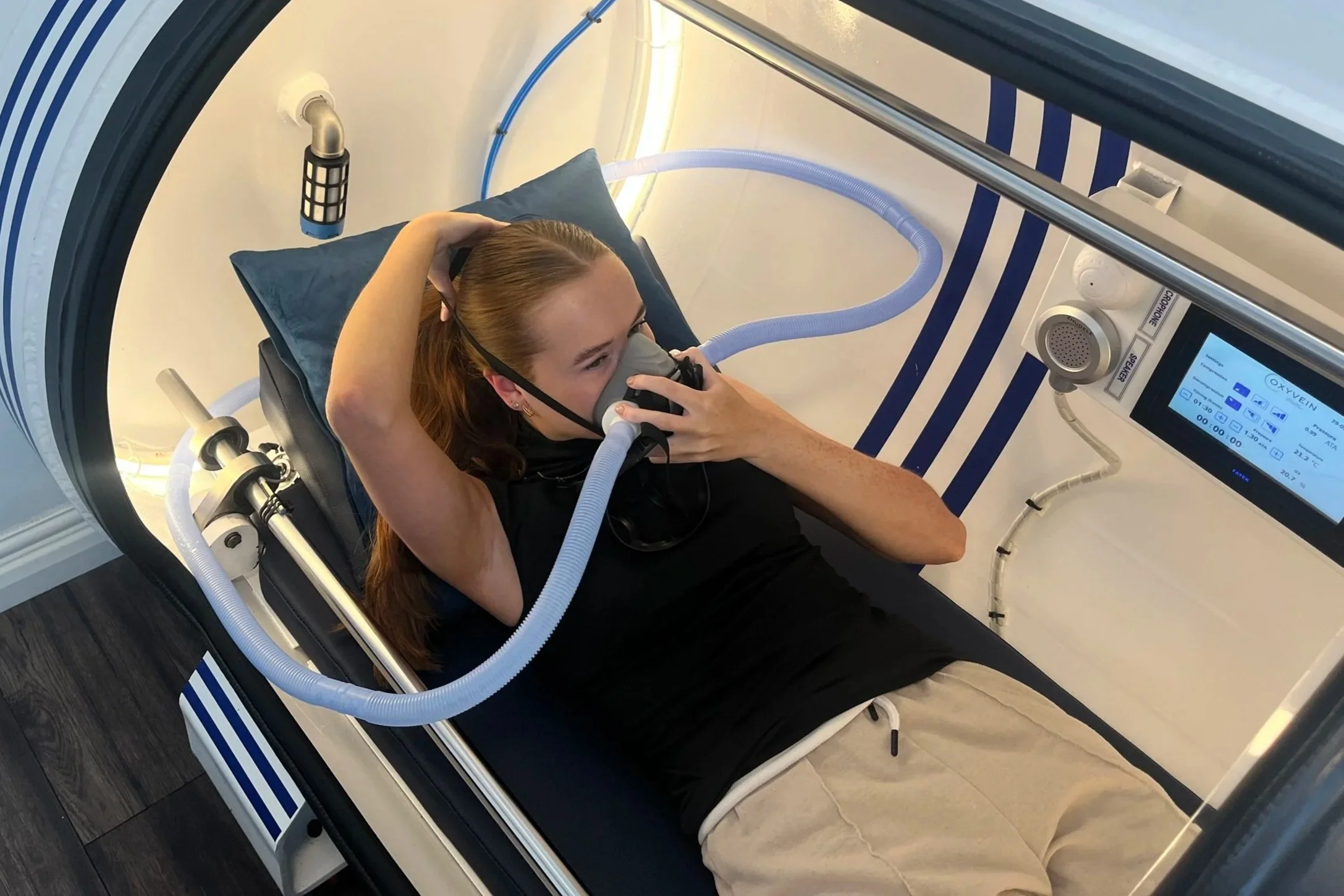
The clinical trial protocols that produced these results used 10-40 sessions of 30-90 minutes at 2 ATA, typically several days per week. This gives a useful benchmark, though individual protocols may vary.
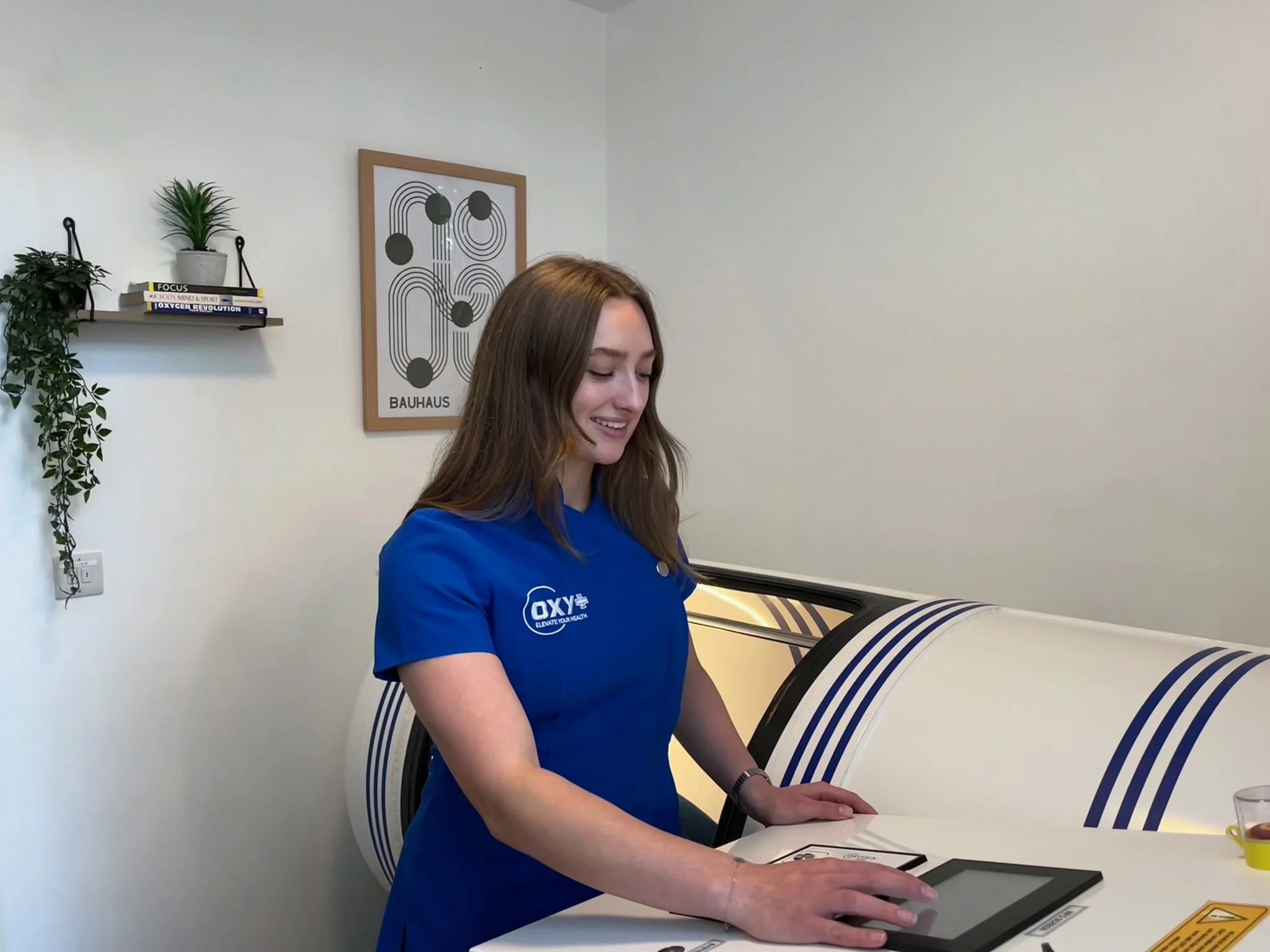
At OxyPlus, our Newcastle HBOT clinic, here is how we approach fibromyalgia:
Initial Consultation — We discuss your symptoms, history, current medications, and what you've already tried. Fibromyalgia often arrives with a history of other investigations and treatments, and understanding your full picture helps us design the most appropriate approach.
Realistic Expectations — Most clients with fibromyalgia begin to notice changes in sleep quality and fatigue within the first 10–15 sessions. Pain improvements typically develop more gradually, reflecting the time required for neuroplastic change to take effect. The brain imaging data from clinical trials suggests these changes continue beyond the active treatment period.
Ongoing Review — We monitor your response throughout and maintain open communication. We can liaise with your GP or rheumatologist if helpful.
A Word on What HBOT Is Not
HBOT is not a cure for fibromyalgia, and we would never present it as one. Fibromyalgia is a complex, multifactorial condition and most people benefit from a multi-modal approach, which may include appropriate movement, sleep support, psychological input, and dietary considerations alongside HBOT.
What HBOT offers is a biologically grounded mechanism for addressing the underlying neurological dysfunction of fibromyalgia in a way that current pharmaceuticals demonstrably struggle to. The clinical trial evidence is more robust for HBOT in fibromyalgia than many people realise and certainly more robust than the lack of mainstream awareness suggests.
We also recognise that people with fibromyalgia have often spent years and considerable money pursuing treatments that didn't help. We take that seriously. We are honest about what the evidence shows, and equally honest about where it has limits. Your initial consultation is an opportunity to ask every question and to make an informed decision about whether HBOT is right for you.
HBOT for Fibromyalgia in Newcastle — OxyPlus
If you're living with fibromyalgia in Newcastle or across the North East, including Gateshead, Sunderland, Durham, Northumberland, or Teesside, and you'd like to explore whether HBOT could form part of your care, we would be glad to hear from you.
Disclaimer: This article is for informational purposes only and does not constitute medical advice. Always consult your GP, rheumatologist, or a qualified healthcare professional before starting any new therapy. HBOT is a complementary approach and should not replace prescribed treatment. Individual results vary.